Winter Prep: How to Get Your Car Ready for Cold-Weather Transport

Winter Prep: How to Get Your Car Ready for Cold-Weather Transport
Shipping a vehicle during the colder months requires more than simply booking a carrier and handing over the keys. Whether you are relocating for a new job, buying a car from an out-of-state dealership, or heading south as a seasonal snowbird, freezing temperatures and unpredictable road conditions introduce unique variables to the auto transport process. Taking the time to prepare your vehicle before the truck arrives protects your investment, streamlines the loading process, and helps prevent mechanical surprises upon delivery.
Why Winter Preparation Matters When Shipping a Car
Winter weather introduces complex logistical and mechanical challenges to the auto transport industry. Across northern states and high-elevation corridors, carriers regularly navigate heavy snowstorms, black ice, freezing rain, and reduced visibility. Even if your pickup location enjoys mild temperatures, your vehicle may travel through regions experiencing sub-zero wind chills along its route.
Sub-freezing temperatures directly impact a vehicle’s fluids, battery voltage, and tire pressure. If a car sits on an open trailer for several days in freezing conditions without proper preparation, minor maintenance oversights can quickly escalate into dead batteries, flat tires, or frozen fluid lines at the delivery destination.
Completing thorough preparation before pickup minimizes avoidable delays and complications. Drivers operate on strict federal Hours of Service regulations and tight routing schedules. When a vehicle is cleared of snow, mechanically sound, and ready for immediate loading, the driver can complete the inspection and secure the car safely without losing valuable daylight. For long-distance movers and snowbirds coordinating household deliveries, flights, and temporary housing, a well-prepared vehicle ensures the shipping process stays as smooth and predictable as possible.
Essential Winter Car Shipping Preparation Checklist
Follow this practical checklist in the days leading up to your scheduled pickup. Aim to complete every step at least 24 hours before the carrier arrives so you have time to address any unexpected maintenance needs.
Clean Your Car Before Transport
- Wash the exterior thoroughly: Dirt, dried road salt, and winter grime easily mask minor dings, paint chips, and surface scratches. A clean exterior allows both you and the driver to see the true condition of the paint and body panels.
- Facilitate an accurate inspection: At pickup, the driver will conduct a walk-around inspection and note existing cosmetic flaws on the Bill of Lading. A clean car prevents disputes over whether a scratch occurred before or during transit.
- Take detailed photographs: Once the car is washed and dry, take clear, well-lit photos from every angle—including the roof, bumpers, wheels, and windshield—to serve as your personal baseline record.
Check Your Battery and Electrical System
- Account for cold-weather drain: Freezing temperatures slow down the chemical reactions inside a lead-acid battery, reducing its cranking power by up to 50 percent in extreme cold. A weak battery that starts fine in a heated garage may fail completely after sitting overnight on a transport trailer.
- Test battery health and charge: Have a technician test your battery’s voltage and cold-cranking amps (CCA), and replace it if it is nearing the end of its lifespan.
- Verify electrical components: Ensure the ignition, interior dome lights, and power locks function properly.
- Disclose non-running status early: Vehicles with dead batteries or electrical failures cannot be driven onto a carrier ramp. They require specialized winch equipment and specific trailer placement, which must be arranged with your transport broker in advance.
Check Tire Pressure and Condition
- Adjust for temperature drops: For every 10°F drop in ambient temperature, tire pressure decreases by approximately 1 to 2 PSI. Underinflated tires make loading onto narrow trailer ramps hazardous and increase the risk of sidewall damage when wheel straps are tightened.
- Inflate to manufacturer specs: Check the PSI sticker inside your driver-side door jamb and inflate all four tires (plus the spare) to the recommended level.
- Inspect tread and sidewalls: Look for bulges, dry rot, punctures, and adequate tread depth so the tires maintain reliable traction on slick metal loading ramps.
Inspect Antifreeze and Essential Fluids
- Verify coolant and antifreeze protection: Antifreeze prevents the water in your radiator and engine block from freezing and expanding, which can cause catastrophic engine cracking. Use a coolant hydrometer or visit a mechanic to confirm your mixture is rated for the lowest temperatures along your shipping route.
- Top off essential fluids: Check engine oil, brake fluid, and transmission fluid to ensure there are no active leaks that could drip onto other vehicles on a multi-car carrier.
- Switch to winter-grade washer fluid: Standard summer washer fluid or plain water will freeze solid in the reservoir and lines, potentially cracking the tank. Flush and refill the system with a de-icing, winter-rated fluid.
- Consult professionals: Always follow your owner’s manual specifications or ask a certified mechanic to perform a quick winter fluid check before transport.
Check Windshield Wipers and Exterior Lights
- Inspect wiper blades: Look for torn rubber, brittleness, or ice buildup on the wiper blades so you are ready to drive safely immediately upon delivery.
- Test all exterior lighting: Verify that headlights, high beams, brake lights, turn signals, and hazard flashers work properly. During winter, carriers frequently load and unload vehicles in low-light conditions, early dusk, or overcast weather where functional lighting is critical for safety.
- Check glass for chips: Inspect the windshield and windows for existing rock chips or hairline cracks, as extreme temperature fluctuations can cause small glass defects to spread.
Protect Your Vehicle From Snow, Ice, and Freezing Temperatures
During winter transit, vehicles traveling on standard carriers are exposed to swirling snow, freezing spray, and slush kicked up by highway traffic. While you cannot control the weather along the interstate, you can prevent pre-existing moisture and loose gear from causing damage.
Before the driver arrives, clear all loose snow and ice from the hood, roof, trunk, windows, and wheel wells. Built-up snow obscures the vehicle during inspection, adds unnecessary weight, and can slide onto windshields or other vehicles during loading. Additionally, inspect your door seals and trunk weatherstripping for cracks or tears; intact rubber seals keep melting snow and freezing rain out of the cabin, while a quick spritz of silicone lubricant prevents doors from freezing shut.
Avoid leaving loose tarps, aftermarket car covers, or bungee cords on the vehicle. High highway winds will whip loose fabric against the paint, acting like sandpaper and causing severe clear-coat damage. If you want to shield your vehicle from direct exposure to snow, slush, and road grime, consider booking enclosed auto transport. While an enclosed trailer keeps your car dry and protected from exterior elements, keep in mind that standard enclosed trailers are not climate-controlled and do not eliminate ambient freezing temperatures.
Prepare Your Car’s Interior and Exterior Before Pickup
Taking a few straightforward steps to clear out your vehicle’s cabin and streamline its exterior profile helps prevent damage and keeps your shipment compliant with industry regulations.
Remove Personal Belongings
- Empty the cabin and trunk: Remove all luggage, electronics, important documents, child car seats, and valuables before pickup.
- Understand carrier restrictions: Auto transport carriers are licensed by the Department of Transportation (DOT) to haul vehicles, not household goods. Personal items are not covered by the carrier’s cargo insurance, and excessive weight inside the cabin can violate strict highway weight limits.
- Prevent interior damage: Unsecured items can shift, slide, or become projectiles during sudden braking or steep ramp loading, damaging your interior upholstery or glass.
Remove Exterior Accessories
- Detach aftermarket racks: Remove roof boxes, ski racks, bike carriers, and cargo baskets whenever possible to reduce vehicle height and prevent wind damage.
- Secure loose trim: Remove or tightly secure loose spoilers, mud flaps, or custom ground effects that could catch on trailer ramps.
- Fold mirrors and retract antennas: Fold in side-view mirrors to maximize clearance on narrow carrier decks, and retract or unscrew power/whip antennas so they do not snap off during loading.
Keep the Fuel Tank at the Recommended Level
- Aim for a quarter tank: Most carriers recommend leaving your fuel tank approximately one-quarter full (around 25 percent) on pickup day.
- Why less fuel is better: A quarter tank provides plenty of fuel for the driver to load, unload, and reposition the vehicle at terminal hubs without adding unnecessary weight. Gasoline weighs roughly 6 pounds per gallon, so a full tank adds over 100 pounds of dead weight—a critical factor when carriers must stay under strict federal gross vehicle weight limits. Always confirm whether your specific carrier has different fuel requirements.
Should You Winterize Your Car Before Shipping?
There is an important distinction between winterizing a car for daily winter driving and preparing it for commercial transport. Preparing for transport focuses on ensuring the vehicle can start, roll, steer, and withstand sub-freezing ambient temperatures for several days to a couple of weeks without mechanical failure.
Whether you need deeper winterization depends on your shipping route, transit duration, and what happens after delivery. If you are shipping a car from Florida to Minnesota in January, upgrading your antifreeze concentration and washer fluid to sub-zero ratings is essential, even if the car runs fine at pickup. Conversely, if the vehicle will sit unused in an unheated garage at the destination for several months, you should follow your manufacturer’s long-term storage guidelines—such as adding a fuel stabilizer or arranging for a trickle charger once it arrives.
Never drain essential fluids or disconnect major mechanical components before shipping unless explicitly instructed by your carrier for a specialized non-running transport. Standard auto transport requires your vehicle to be fully operable so the driver can safely maneuver it onto and off the trailer.
Open vs. Enclosed Auto Transport During Winter
Choosing the right trailer type is one of the most important decisions when shipping a car in cold weather. Both open and enclosed transport operate year-round, and each offers distinct advantages depending on your vehicle and budget.
| Feature | Open Auto Transport | Enclosed Auto Transport |
| Weather Exposure | Exposed to snow, rain, sleet, and road salt | Shielded from direct precipitation and road grime |
| Cost | More affordable; standard industry pricing | Typically 30% to 60% higher than open transport |
| Availability | High carrier availability on most routes | Fewer carriers; requires earlier booking |
| Best Suited For | Daily drivers, standard sedans, SUVs, and trucks | Classic, luxury, exotic, antique, and collector cars |
Open Car Transport in Cold Weather
Open carriers are the multi-level trailers you commonly see hauling new vehicles to dealerships across the highway. Because your car rides on an open deck, it is exposed to the same winter conditions as any vehicle driving down the road—including snow, sleet, road salt, and winter sand.
Despite the exposure, open transport remains the most popular, cost-effective choice for standard daily drivers. Modern automotive clear coats and undercoatings are engineered to handle winter highway conditions, and a simple touchless car wash after delivery easily removes road salt and grime.
Enclosed Car Transport for Additional Protection
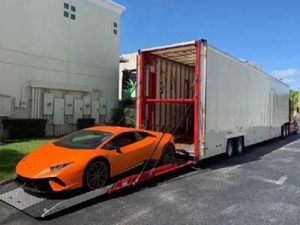
Enclosed carriers transport vehicles inside a fully covered, hard-sided or soft-sided trailer, completely shielding them from snow, freezing rain, road salt, and kicked-up gravel. Many enclosed haulers also use hydraulic lift gates rather than steep ramps, making them ideal for low-clearance sports cars.
This option is best suited for classic cars, luxury models, exotics, freshly restored vehicles, or any car where preserving pristine exterior condition is a top priority. Because enclosed fleets are smaller than open fleets, rates are higher and scheduling windows may require greater flexibility during peak winter months.
Which Winter Transport Option Should You Choose?
The best choice depends on your vehicle’s value, ground clearance, budget, and the severity of winter weather along your route. If you are shipping a reliable everyday SUV or commuter sedan, open transport offers dependable service at a lower price point. If you are transporting a high-value collector car across the northern states in the middle of winter, the peace of mind provided by enclosed transport is well worth the added investment. Neither option is universally right for every driver—weigh your protection preferences against your budget and timeline.
How Winter Weather Can Affect Car Shipping Schedules
Winter weather is the single biggest variable in auto transport scheduling. Heavy snowstorms, whiteout conditions, icy highways, freezing rain, and mountain pass closures routinely force commercial trucks to slow down, reroute, or wait out severe weather at truck stops.
Because commercial car carriers are massive, heavy vehicles—often weighing up to 80,000 pounds fully loaded—operating them on black ice or unplowed roads puts the driver, your vehicle, and other motorists at serious risk. Safety must always take priority over meeting an exact delivery timestamp.
When shipping a car between November and March, build extra flexibility into your pickup and delivery windows. Maintain open communication with your transport coordinator or driver so you stay informed about weather-related reroutes. Having a backup contact person available at either the pickup or delivery location ensures your vehicle can still be handed off smoothly if a storm shifts your schedule by a day or two.
What to Expect on Car Pickup Day During Winter
Knowing how pickup day unfolds helps eliminate stress when cold weather is in the forecast.
Complete the Vehicle Inspection
When the driver arrives, you will walk around the vehicle together to inspect its exterior condition. Ensure all snow and dirt are cleared so existing dings or scratches are clearly visible. Take your own timestamped photos of all four sides, the roof, and the odometer before the car is loaded. Carefully review the Bill of Lading (BOL) to verify that any pre-existing damage is accurately marked, then sign and keep your copy—this document serves as your official inspection report and receipt.
Make Sure Your Vehicle Is Ready for Loading
Commercial car carriers are long and wide, and they often cannot navigate narrow residential streets, cul-de-sacs, or unplowed driveways. Be prepared to meet the driver at a nearby wide street or cleared commercial parking lot (such as a large grocery store or shopping center) if ice or snowbanks block access to your home. Confirm the car starts, steers, and brakes smoothly, and remind the driver of any quirks—such as a sensitive alarm system or tricky ignition—before they drive it onto the ramps.
Confirm Pickup and Delivery Details
Before the carrier departs, double-check that the driver has the correct delivery address, your primary phone number, and an alternate contact number. Discuss any known snow or ice access restrictions at the destination so the driver can plan their final approach safely.
Common Winter Car Shipping Preparation Mistakes to Avoid
- Ignoring battery health before pickup: A weak battery can fail in freezing transit temperatures, turning a standard load into a difficult winch-off at delivery.
- Overlooking tire pressure drops: Cold air deflates tires, risking rim damage or unsafe loading conditions on metal ramps.
- Skipping antifreeze and fluid checks: Insufficient coolant protection can lead to frozen fluid lines or severe engine damage in sub-zero weather.
- Packing personal items inside the car: Loose belongings are uninsured, add unauthorized weight, and can damage interior trim during transit.
- Leaving exterior accessories attached: Loose roof racks, bike mounts, or unfolded mirrors are vulnerable to wind damage and clearance issues.
- Failing to document pre-existing condition: Skipping a pre-shipment wash and photo walk-around makes it difficult to verify new transit damage on the Bill of Lading.
- Expecting rigid delivery dates during storm season: Treating pickup and delivery estimates as guaranteed appointments leads to unnecessary frustration when winter storms delay highway traffic.
- Withholding mechanical issues from the carrier: Failing to disclose dead batteries, brake issues, or low ground clearance prevents the dispatcher from sending the right trailer equipment.
Frequently Asked Questions About Preparing a Car for Winter Transport
Can I Ship My Car During Winter?
Yes, auto transport companies operate year-round across the country, including throughout the winter months. While demand remains steady—especially along popular snowbird routes—severe winter storms and icy road conditions can occasionally require flexible pickup and delivery schedules.
Should I Winterize My Car Before Shipping?
You do not need to perform full long-term storage winterization, such as draining fluids or putting the car on blocks, since the vehicle must remain operable for loading and unloading. However, you should complete essential cold-weather prep—specifically testing your battery, verifying your antifreeze mixture, switching to winter windshield washer fluid, and checking tire pressure.
Does Cold Weather Damage Cars During Transport?
Cold temperatures alone rarely damage a properly maintained vehicle, provided the battery is strong and the antifreeze is rated for freezing conditions. On an open carrier, your car will be exposed to road salt, slush, and winter grime, which should be washed off after delivery. If you want to prevent all exposure to winter precipitation and road debris, enclosed transport offers full exterior shielding.
Should I Disconnect My Car Battery Before Shipping?
No, you should not disconnect your battery before shipping unless your carrier specifically instructs you to do so for a specialized non-running shipment. Carriers need to start and drive your vehicle to load, unload, and reposition it safely during transit. Make sure the battery is fully charged and securely mounted before pickup.
How Much Fuel Should I Leave in My Car Before Shipping?
Keep your fuel tank at approximately one-quarter full (around 25 percent) unless your carrier provides different instructions. This provides enough fuel for loading, unloading, and short terminal transfers while keeping the vehicle’s overall weight low for safe transport.
Can Snow and Ice Delay Car Delivery?
Yes, snowstorms, freezing rain, icy roads, and highway closures are common causes of transit delays during winter. Professional drivers prioritize safety and will pause or reroute trips when severe weather makes highway travel hazardous. Staying flexible and maintaining communication with your transport provider will help you navigate winter schedule adjustments smoothly.
Is Enclosed Transport Better for Winter Car Shipping?
Enclosed transport provides superior protection against snow, freezing rain, road salt, and winter road debris because your vehicle travels inside a fully covered trailer. While open transport is safe and cost-effective for everyday vehicles, enclosed transport is generally the better option for classic, luxury, exotic, or high-value cars during harsh winter weather.